NUTRITION
How to compare multivitamins
By Sebastian, Founder · 24 February 2026 · 7 min read
Most multivitamin comparisons are done on the front of the box, which is the one surface designed to prevent comparison. The back is where the product is. Here is how to read it quickly.
1. Find the serving size first
Every number on the panel is per serving, and a serving is not always one capsule. Two products can look identical until you notice one is asking for three capsules and the other for one. Convert everything to a daily dose before you compare anything else.
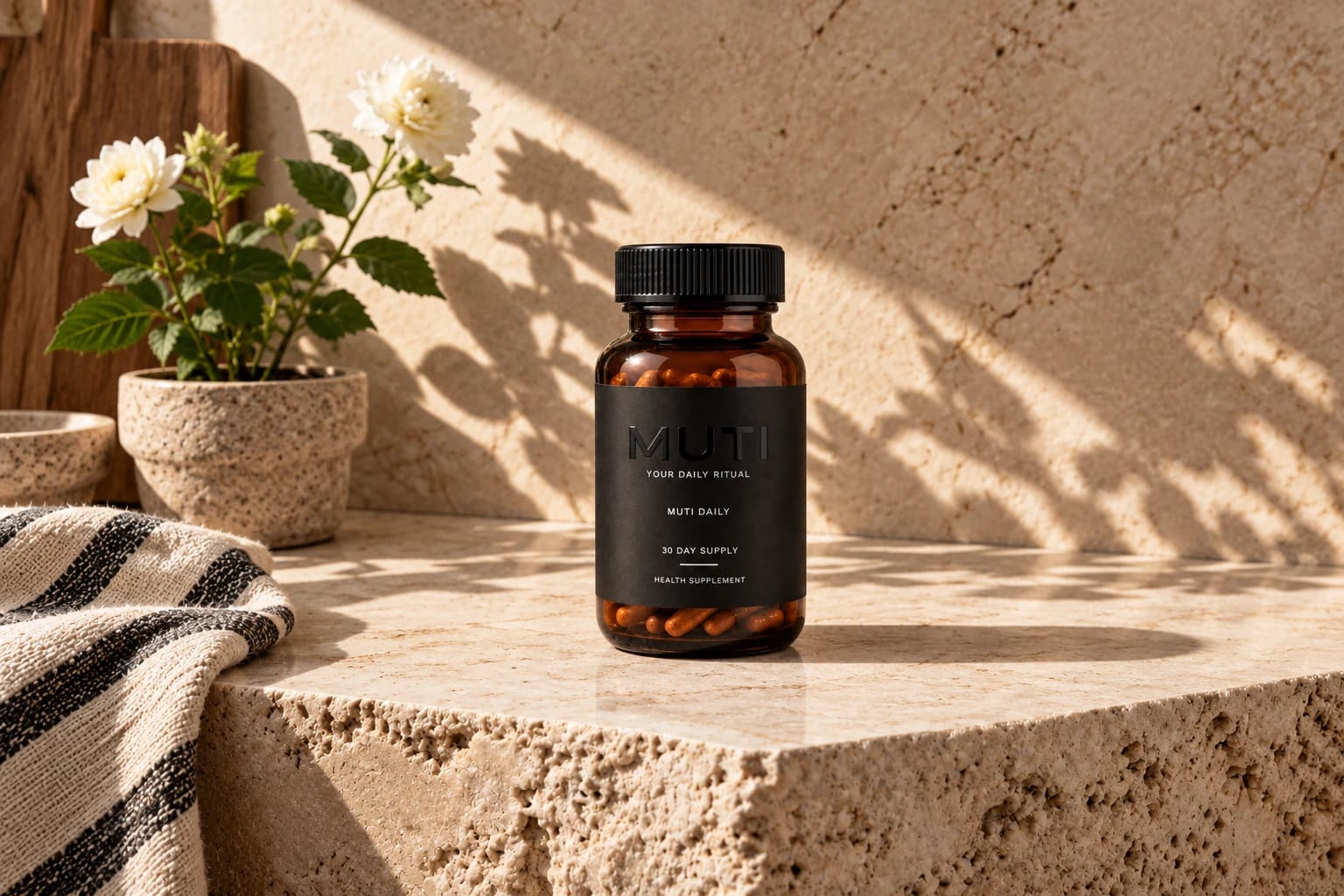
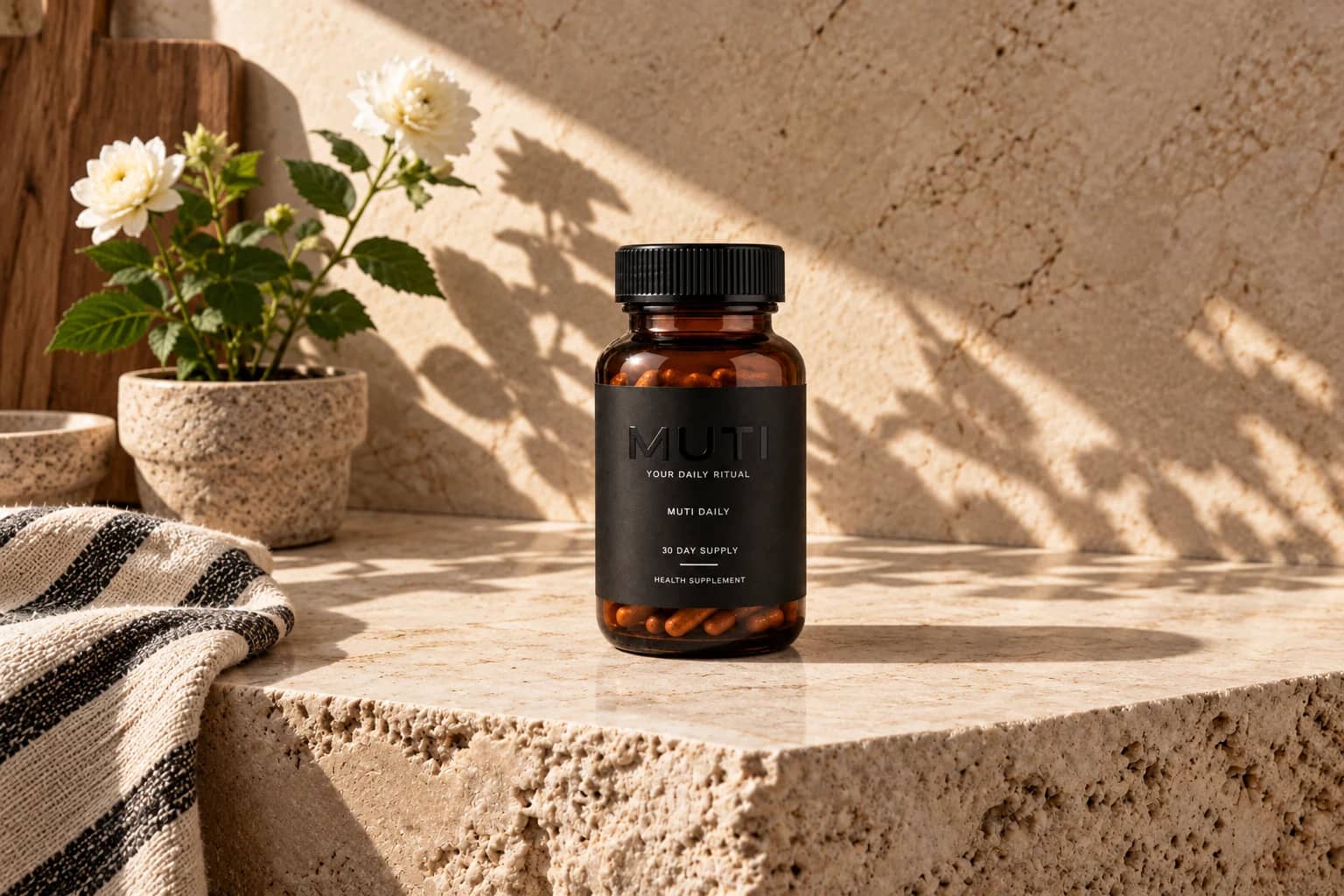
MUTI DAILY is two capsules a day, and the published panel is per two capsules.
2. Read the forms, not just the names
Magnesium oxide and magnesium bisglycinate both print as magnesium. Cyanocobalamin and methylcobalamin both print as B12. If a panel gives a nutrient name with no form after it, the form was not considered worth mentioning.
3. Check for elemental weights on minerals
For minerals the meaningful number is the elemental weight, the weight of the mineral itself rather than of the whole compound. A panel that does not say which one it is quoting is a panel you cannot compare.
4. Count the panel, then discount the decoration
A long ingredient list is not automatically better. Some products carry a dozen botanicals at doses too small to be doing much of anything, present so they can appear on the front of the box. Look at whether the amounts are stated individually. If several ingredients share one combined weight under a blend name, you are being shown a list rather than a formulation.
5. Look at what the label does not say
Vague language is usually the residue of a specific claim that was not available. When a product says supports wellbeing, it is worth asking what it would have said if it could have said more.
The absence of the two SAHPRA statements on a South African supplement is a different kind of silence, and a more serious one.
6. Convert to cost per day, last
Price divided by number of daily doses, not by number of capsules. Do this last, once you know what you are comparing, or you will end up comparing two things that are not the same thing at a price that suggests they are.
Applying it
Run those six checks across any two products and the differences resolve fast. Usually one of them turns out to be specified on cost and the other on form, and the front of the box gave you no way to tell.
MUTI publishes the whole panel on the Formula page precisely so that this exercise is possible against us. A product that cannot survive its own comparison method is not worth the page it is printed on.
COMMON QUESTIONS
- How do I compare two multivitamins?
- Convert both to a daily dose using the serving size, compare the chemical form of each nutrient rather than only the name, check that mineral amounts are given as elemental weights, look for individually declared amounts rather than proprietary blends, and only then work out cost per day.
- Is a multivitamin with more ingredients better?
- Not necessarily. Long lists sometimes carry ingredients at token amounts so they can appear on the front of the box. What matters is whether each amount is declared individually and at a meaningful level.
- What should be on a South African supplement label?
- Serving size, each active ingredient with its amount and form, and for an unregistered Category D health supplement the two statutory statements about SAHPRA evaluation and the absence of disease claims.
Written by Sebastian, founder of MUTI. This journal is about habits, design and how to read the supplement industry. It is not health, nutritional or medical advice, and it makes no claims about what any supplement does. Speak to a healthcare professional about your own circumstances.