NUTRITION
Chelated, methylated, oxide: the form on the label
By Sebastian, Founder · 15 April 2026 · 6 min read
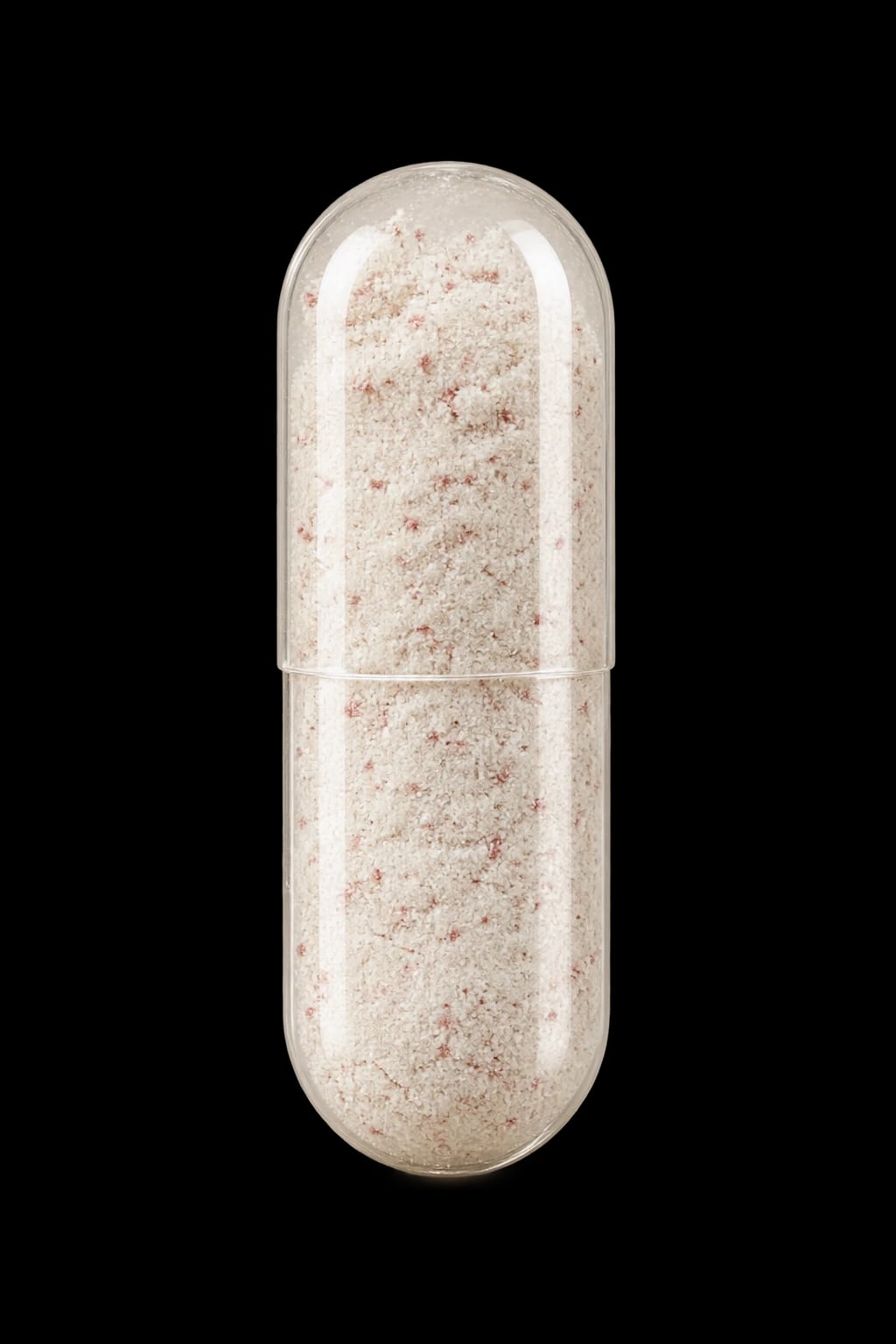
On a supplement panel, the nutrient name is the headline and the words after it are the actual product. Magnesium is a headline. Magnesium bisglycinate is a molecule. The gap between those two is where most of the difference between products lives.
Here is what the common terms mean, without the marketing attached to them.
Chelated
A chelate is a mineral bound to an organic molecule, most often an amino acid. Bisglycinate means the mineral is bound to two glycine molecules. The mineral arrives attached to something rather than as a bare salt.
Oxides, carbonates and sulphates are the unchelated alternatives. They are cheaper to produce and they let a label declare the same milligrams of the same mineral.
Methylated, and what active form means
Some nutrients are supplied in a form the body first has to convert, and some are supplied in the form it uses. Folic acid is the synthetic precursor. Calcium L-5-methyltetrahydrofolate is the folate the body works with directly. Cyanocobalamin is the common B12 precursor. Methylcobalamin and adenosylcobalamin are the two forms in circulation.
The word methylated on a label is usually pointing at this distinction. It is a statement about which molecule is in the capsule, not a promise about what happens next.
Elemental weight, the number that hides
For minerals, the amount that matters is the elemental weight, meaning the weight of the mineral itself rather than the weight of the whole compound. Magnesium oxide is roughly 60 percent magnesium by weight. Magnesium bisglycinate is far less, because glycine makes up much of the molecule.
This is why a panel declaring 400 mg of magnesium bisglycinate and a panel declaring 400 mg of elemental magnesium are describing different quantities. A good label tells you which one it means. MUTI's says elemental.
What MUTI uses
- Magnesium as buffered magnesium bisglycinate, 150 mg declared as elemental magnesium.
- Zinc as a bisglycinate chelate. Copper, manganese and boron as amino acid chelates.
- Folate as calcium L-5-methyltetrahydrofolate. B6 as P-5-P. B2 as riboflavin-5-phosphate.
- B12 as methylcobalamin, an active form.
- Chromium as chromium picolinate. Iodine from potassium iodide.
- Vitamin C as calcium ascorbate, a buffered non-acidic form. Vitamin K as both K1 and K2, the K2 as menaquinone-7.
That list is a description of composition. It is not a claim about what any of it does, and you should be suspicious of a supplement page that slides from one into the other without noticing.
How to use this when comparing
Read the bracket, not the headline. If a panel gives you a nutrient name with nothing after it, that is itself information: the form was not considered worth mentioning, which usually means it was chosen on price.
COMMON QUESTIONS
- What does chelated mean on a supplement label?
- The mineral is chemically bound to an organic molecule, usually an amino acid such as glycine. Bisglycinate means bound to two glycine molecules, as opposed to an unchelated salt like an oxide or carbonate.
- What is the difference between folic acid and methylfolate?
- Folic acid is the synthetic precursor form. Calcium L-5-methyltetrahydrofolate, often shortened to methylfolate, is the form the body works with directly. Both may be declared on a label simply as folate.
- What does elemental magnesium mean?
- The weight of magnesium itself rather than the weight of the whole compound it is supplied in. Since the binding molecule adds weight, a declaration of elemental magnesium is a smaller and more meaningful number.
Written by Sebastian, founder of MUTI. This journal is about habits, design and how to read the supplement industry. It is not health, nutritional or medical advice, and it makes no claims about what any supplement does. Speak to a healthcare professional about your own circumstances.